The Perfect Mimosa Recipe for Your Next Sunny Brunch
Imagine a sunny Sunday morning with your favorite people. The table is set and the air feels light. This perfect mimosa recipe is the only brunch companion you need.
It is bright, bubbly, and incredibly refreshing. You can master this classic drink in seconds. Let’s make your next brunch feel extra special and bright.
Why This Recipe Is a Winner
This recipe uses a precise 1:1 ratio for perfect balance. It is ideal for spring brunches or holiday mornings. You do not need fancy tools to make it.
The flavors are clean and the bubbles stay active. It feels like a celebration in every single sip. Your guests will definitely ask for a second glass.
Simple Method
Making a great mimosa is all about the pour. You want to keep those lovely bubbles alive. Chilling your ingredients is the most important step here.
Just tilt your glass and pour slowly. There is no need for stirring or shaking. Even a total beginner can achieve professional results at home.
Ingredients You’ll Need
These simple ingredients create a crisp and clean flavor profile.
- 3 ounces chilled Dry Sparkling Wine (Brut Champagne, Cava, or Prosecco)
- 3 ounces chilled pulp-free Orange Juice (freshly squeezed and strained preferred)
- 0.5 ounce chilled Orange Liqueur (such as Grand Marnier or Cointreau, optional)
- 1 fresh Orange slice or twist for garnish
Step-by-Step
- Place the champagne flute in the freezer for 10-15 minutes prior to assembly to ensure maximum temperature retention.
- Tightly hold the chilled flute at a 45-degree angle.
- Slowly pour the dry sparkling wine down the inside wall of the glass to prevent excessive foaming and preserve carbonation until the flute is half full.
- If using orange liqueur, add it slowly to the glass now.
- Top the glass with the chilled orange juice. The density of the juice will cause it to naturally mix with the wine; avoid stirring to keep the bubbles active.
- Garnish the rim with a fresh orange slice and serve immediately.
Best Ways to Enjoy It
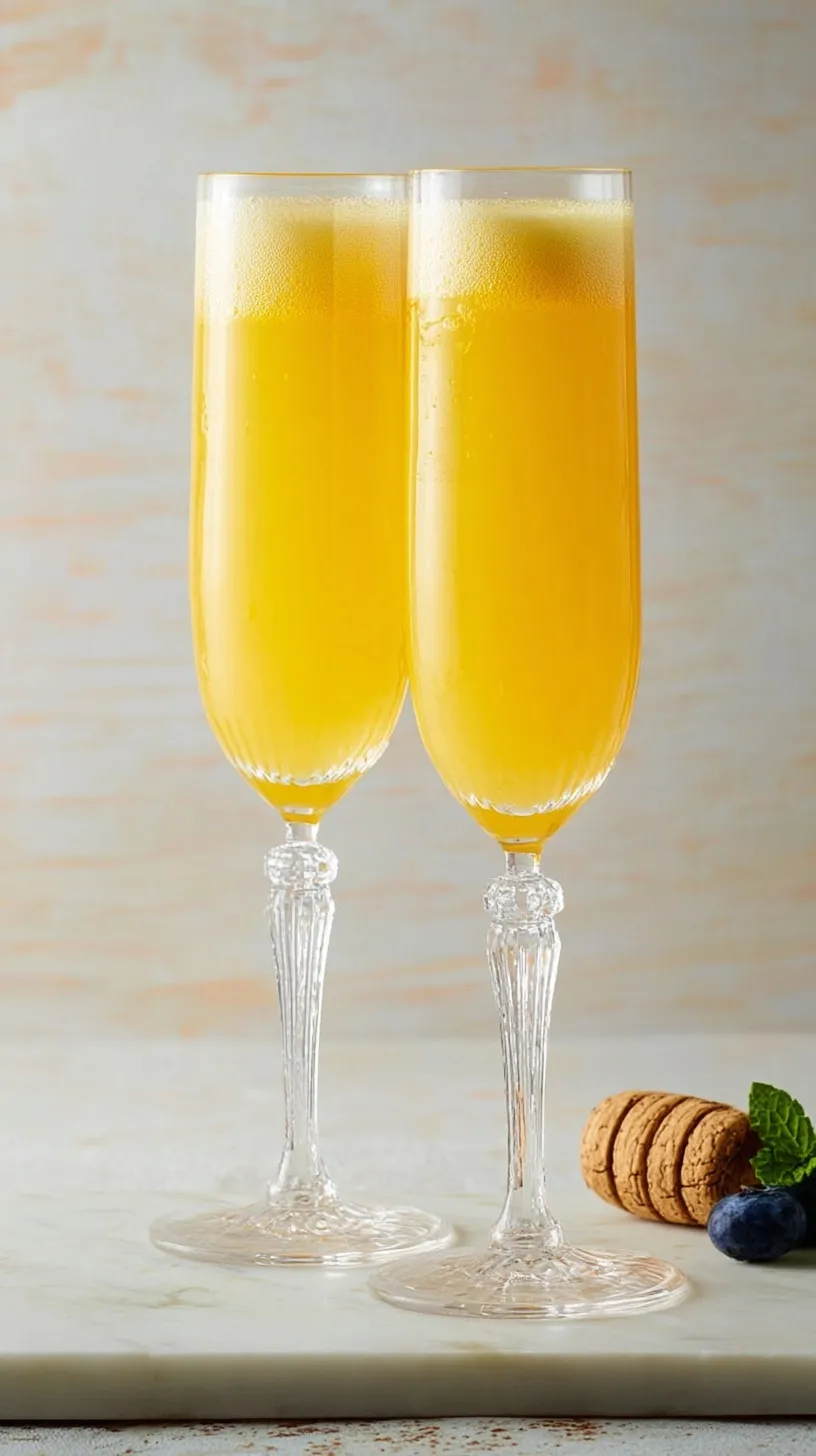
Serve this drink in a tall, elegant flute. It looks stunning next to a plate of fresh fruit. Pair it with fluffy lemon ricotta pancakes for a treat.
Set out a tray for a self-serve brunch bar. Add a small sprig of mint for a pop of green. It makes any weekend feel like a special holiday.
Keep It Fresh
Mimosas are best enjoyed right after you pour them. Sparkling wine loses its fizz quickly once opened. If you have leftover juice, keep it in the fridge.
You can prep your garnishes the night before. Slice your oranges and store them in a sealed container. This saves time when guests arrive for your brunch.
Recipe Tips
- Chill the glass for 15 minutes before serving.
- Use pulp-free juice for a perfectly smooth texture.
- Hold the glass at an angle to preserve bubbles.
- Do not stir the drink to keep it fizzy.
- Choose a dry wine like Brut to avoid oversweetness.
- Freshly squeezed juice makes a huge flavor difference.
- Add the juice last so it mixes naturally.
- Double the batch for a larger holiday gathering.
Ways to Switch It Up
- Try grapefruit juice for a tart and tangy twist.
- Use pomegranate juice for a festive deep red color.
- Swap wine for sparkling cider for a delicious mocktail.
- In summer, add a few fresh raspberries to the glass.
Common Questions
What is the best wine for mimosas?
A dry sparkling wine like Brut is best. It balances the sweetness of the orange juice. Avoid sweet wines like Asti Spumante.
Can I make these in a pitcher?
It is better to make them by the glass. This keeps the carbonation strong and fresh. If you use a pitcher, pour gently.
I hope this bright cocktail adds a little sparkle to your morning. It is the perfect way to celebrate simple moments with family. Enjoy every refreshing sip!
— Clara
Ingredients
Method
- Place the champagne flute in the freezer for 10-15 minutes prior to assembly to ensure maximum temperature retention.
- Tightly hold the chilled flute at a 45-degree angle.
- Slowly pour the dry sparkling wine down the inside wall of the glass to prevent excessive foaming and preserve carbonation until the flute is half full.
- If using orange liqueur, add it slowly to the glass now.
- Top the glass with the chilled orange juice. The density of the juice will cause it to naturally mix with the wine; avoid stirring to keep the bubbles active.
- Garnish the rim with a fresh orange slice and serve immediately.